SKELTON SAWS
THE HEPPLEWHITE SAW
The Hepplewhite Saw
Please note that this saw cannot be pre-ordered, but can only be purchased from our website shop as and when Shane makes them alongside our bespoke orders.
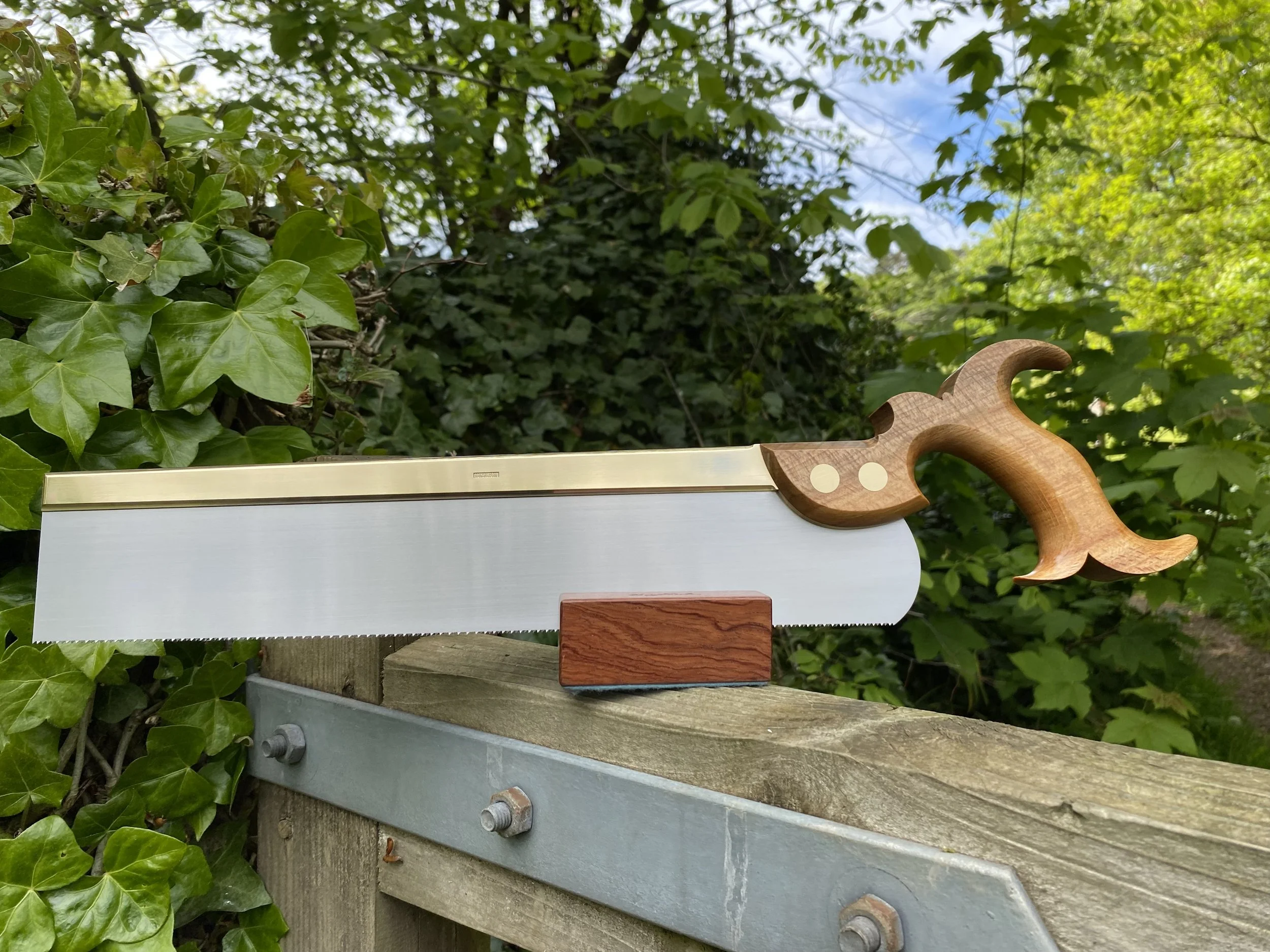
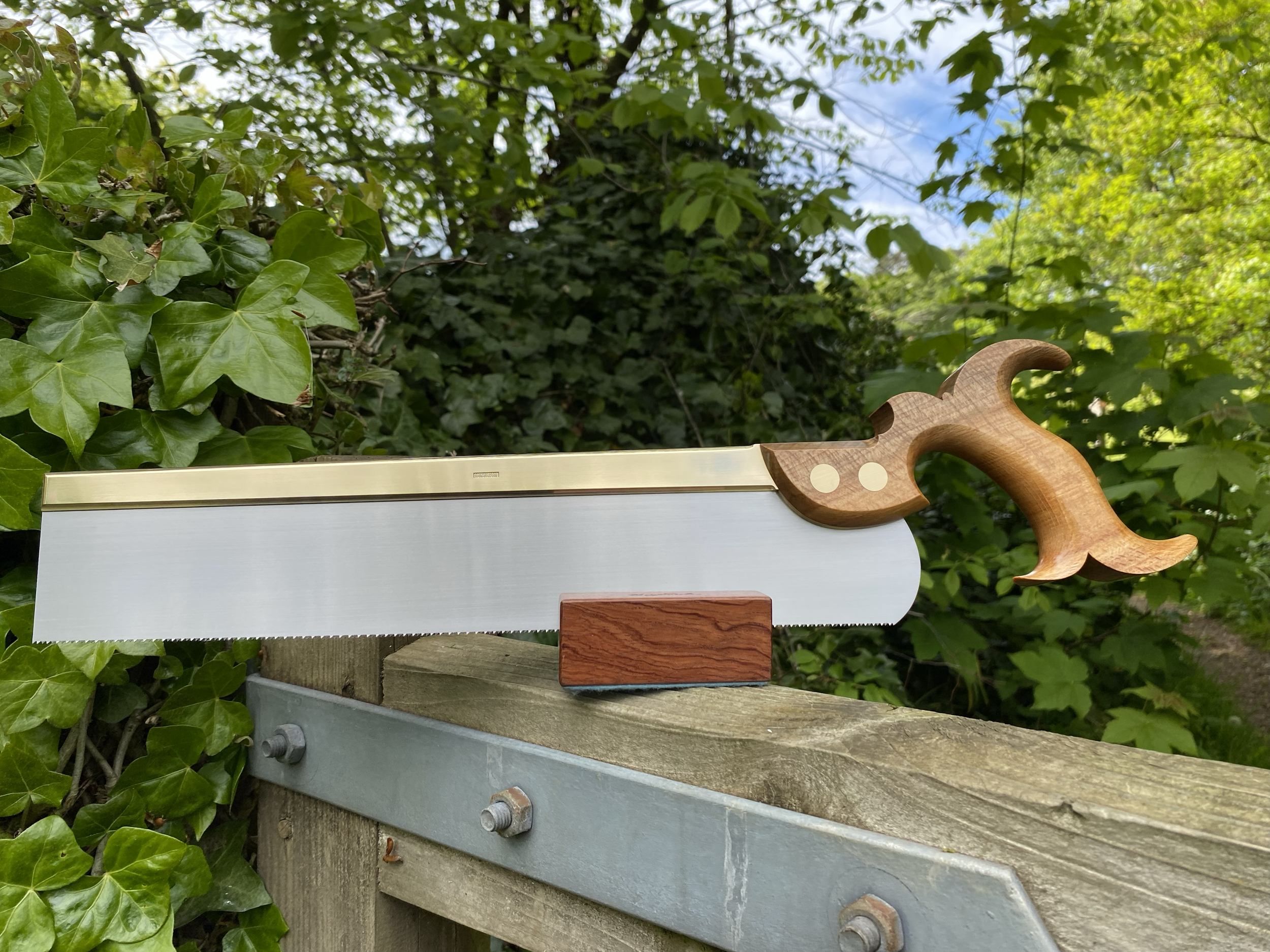
‘Taking inspiration from another of the 18th Century greats, cabinetmaker and designer George Hepplewhite and his wife Alice, I wanted to create a truly elegant and perfectly balanced Fine Carcass Saw. An ‘all round’ saw, I have drawn on my last 12 years of making to create a tool that will be favoured for all jobs at the bench albeit dovetailing or cutting joints for larger scale work. At 13½” this ideal sized saw is universal in its usage enabling the user to produce joint ready cuts effortlessly. Looking like a traditional Georgian saw, but with the modern construction I have developed and perfected over the years, I do believe that this tool will become the most cherished and used saw in your workshop.’ Shane Skelton
George Hepplewhite
I do not think there is anyone in the woodworking world albeit amateur or professional that hasn’t heard of Hepplewhite. Being one of the big three along with Chippendale and Sheraton, his designs have inspired craftsmen and women the world over, but who is he? Well, he’s a bit of an enigma! We think he was born in 1727 or thereabouts in a place called Ryton which is just outside Gateshead in the north of England (A couple of hours drive from us and incidentally where one of my grandparents lived!) He undertook an apprenticeship with Robert Gillow in Lancaster, but even that has been questioned.
Like his contemporaries, he moved to London and set up shop at number 48 Redcross Street, in the St Giles Criplegate area of the city. Shane, and I get the impression that this is more of a retail outlet run by himself and his wife Alice with a small workshop in the back. Our feeling is that although he was a cabinetmaker, that he took his unique designs to larger workshops to be made and then him and Alice retailed them. One would suspect that this is why there is the claim that no work from his hand survives. That is not to say that he never made anything at all, he likely made bespoke pieces for the wealthy. Furthermore, possibly the items he made during his apprenticeship just have not been accredited to him. Notably the Jane Austen House in Chawton claims to have a bookcase previously belonging to the Rev Austen made by George Hepplewhite himself c1780. This had originally come from the vicarage in Steventon and the timeline would suggest that it may well be, however not a single piece of furniture has ever been proven to be by his hand.
It is all a bit speculative and again there is no record of anyone working for him that we have found. Neither is there any record of when he moved to London, however during my research I have found that the company with whom he did his apprenticeship, Gillow who was a luxury maker also had a workshop in London on Thames Street so maybe a transfer was how he ended up in the city initially. Furthermore, you can draw a short straight line across the river to where Hepplewhite sets up his own business, which would make speculative sense. At the age of 59 Hepplewhite died on the 21st of June 1786. Nobody knows why he died, where he is buried or if he had any surviving children, although internet sources claim that there were two, George Jnr and John. It really is all quite a mystery and leaves you wondering why his name ever became embedded in our psyche at all. However, what happens after his death is most intriguing…
Alice Hepplewhite
Who is she? Well again nobody really knows, but I can tell you she is a genius! When Shane made this new saw, in his mind he was accrediting its design features to George Hepplewhite, but on reflection and after my research we feel that it is difficult to completely justify that. Therefore, the Hepplewhite Saw is a nod to both George and Alice, a partnership quite frankly that is not unlike ours.
Alice ran the shop on Redcross Street alongside George. However, following the death of George in 1786 documents show that he left an estate of around £600 and that his workshop assets were auctioned. To put that amount into context it would have bought a luxury townhouse in the city. Alice, it appears continued to run the business and changed the name to ‘A Hepplewhite & Co’ It is not evident who the ‘Co’ relates to, but one might assume the previously mentioned sons. Alice’s genius was revealed two years later when she put an illustrated collection of three hundred furniture designs together and had them made into a book and published. One would assume these were George’s designs, but in all honesty, nobody can concretely say what input Alice had in the business or the designs. It is true to say that much of the Hepplewhite Style, with its slender legs and bows, hearts and feathers is quite stereotypically feminine. Regardless, the business savvy Alice Hepplewhite attributed the work to her late husband and the phenomenally successful ‘Cabinet-Maker and Upholsterer’s Guide’ appealing to a more affluent clientele was published in 1788. One must remember that a woman working in the furniture industry or indeed business or publishing would not have been taken seriously in Georgian society. The publication was so popular that it was reprinted twice and proved popular across the globe, notably in the US. One could argue that it was Alice Hepplewhite’s ingenuity that made George and the Hepplewhite Style famous and successful with its popularity increasing only after George’s death.
Sadly, we do not know much about Alice after this, only that she once existed. What a legend of a woman!
I found that the property on Redcross Street later became a hat maker and now is where the Barbican Centre sits.
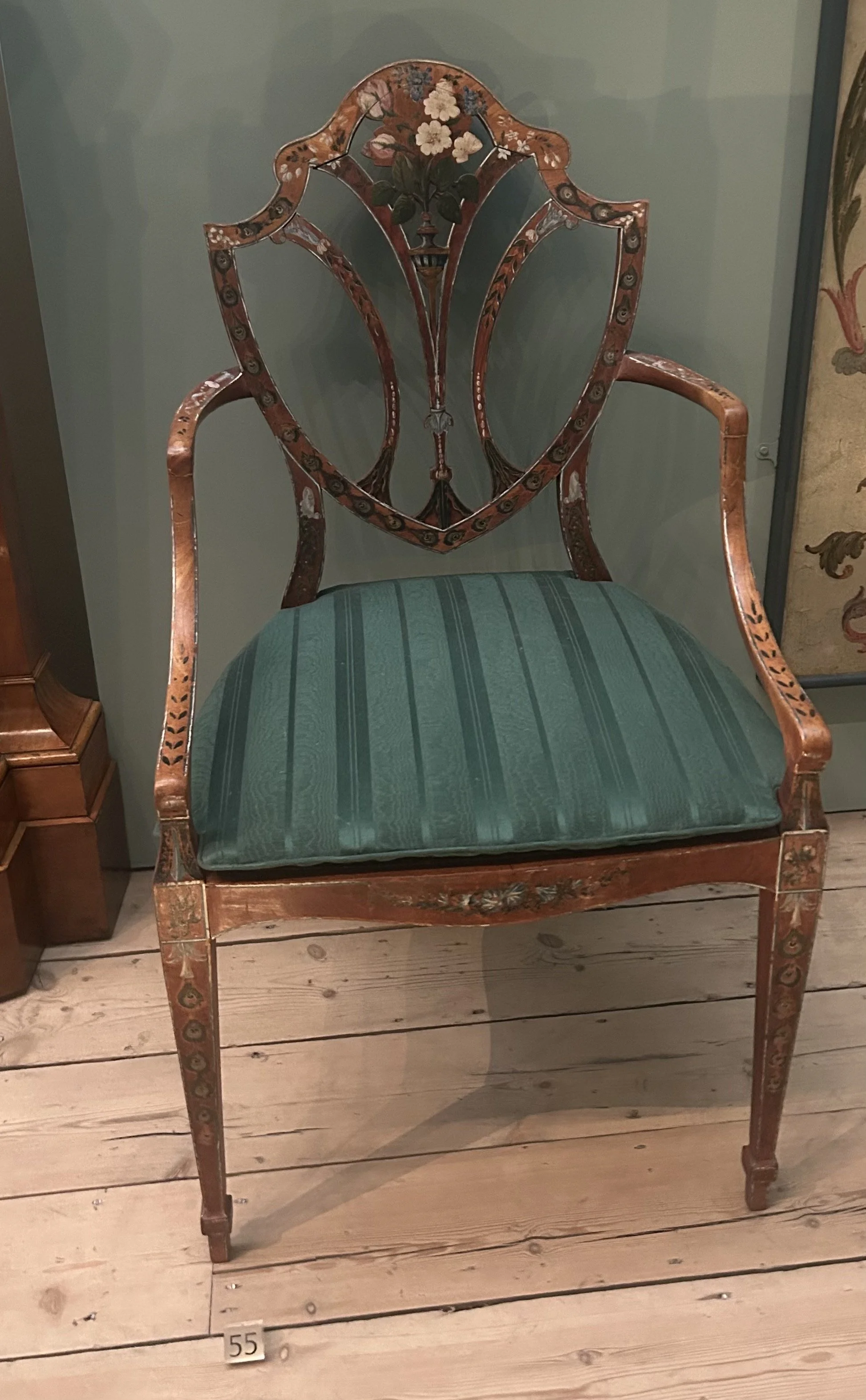
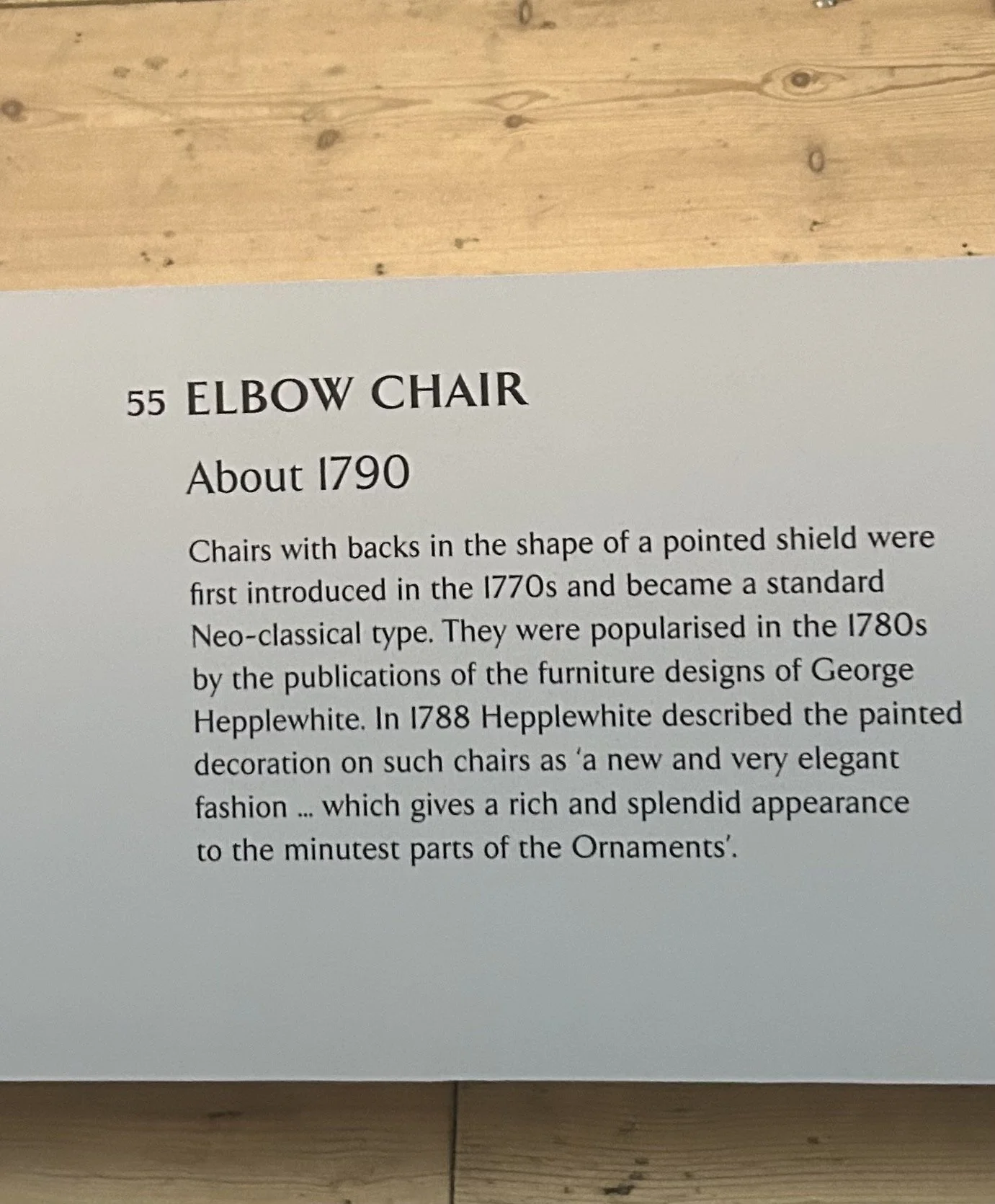
A photo we took last year at the V&A of a classical Hepplewhite Style chair of the period with a shield made popular by the publication of the ‘Cabinet-Maker and Upholsterer’s Guide’ 1788. Likely the spark of inspiration for The Hepplewhite Saw.
The Hepplewhite 13½” Fine Carcass Saw
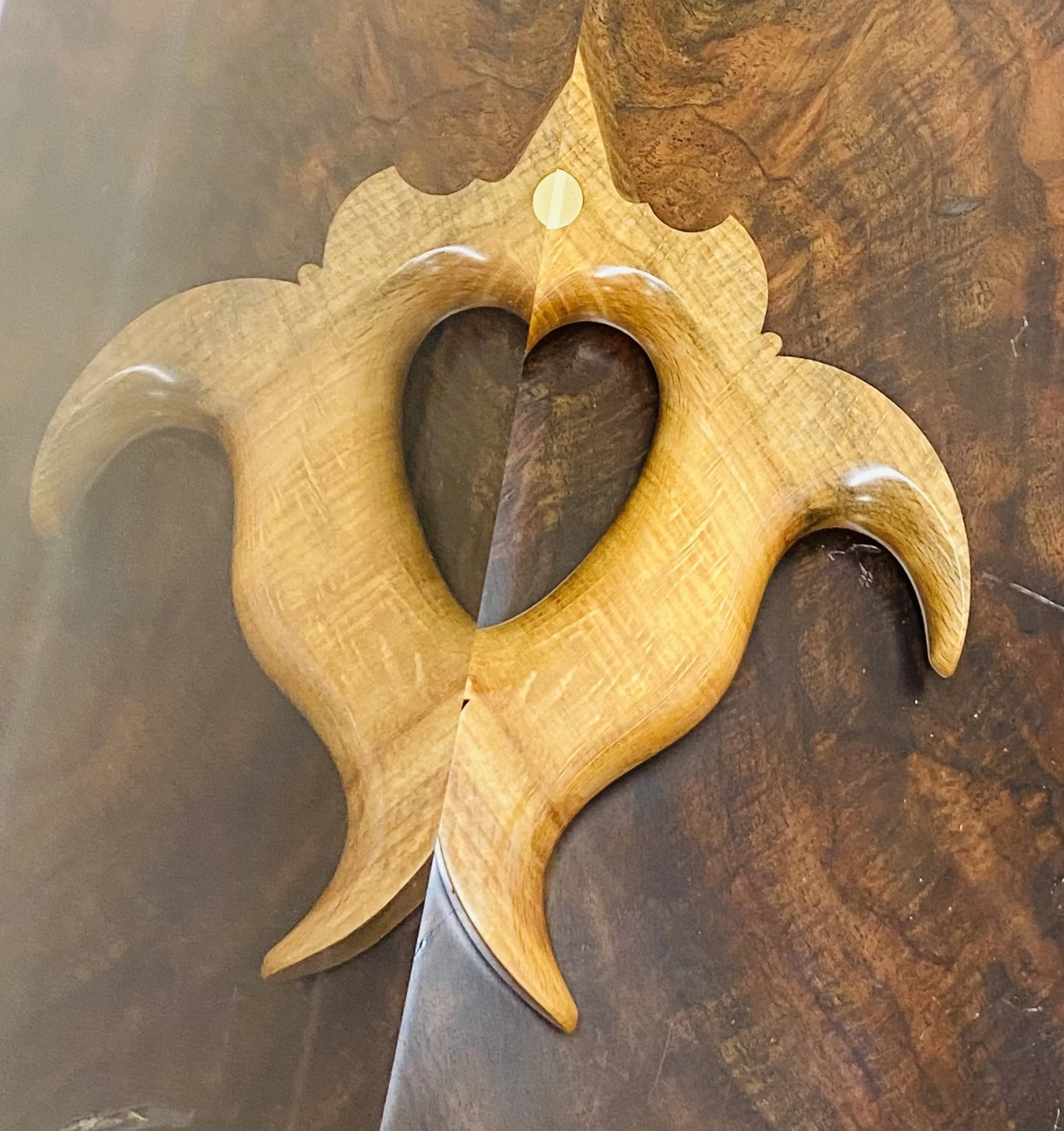
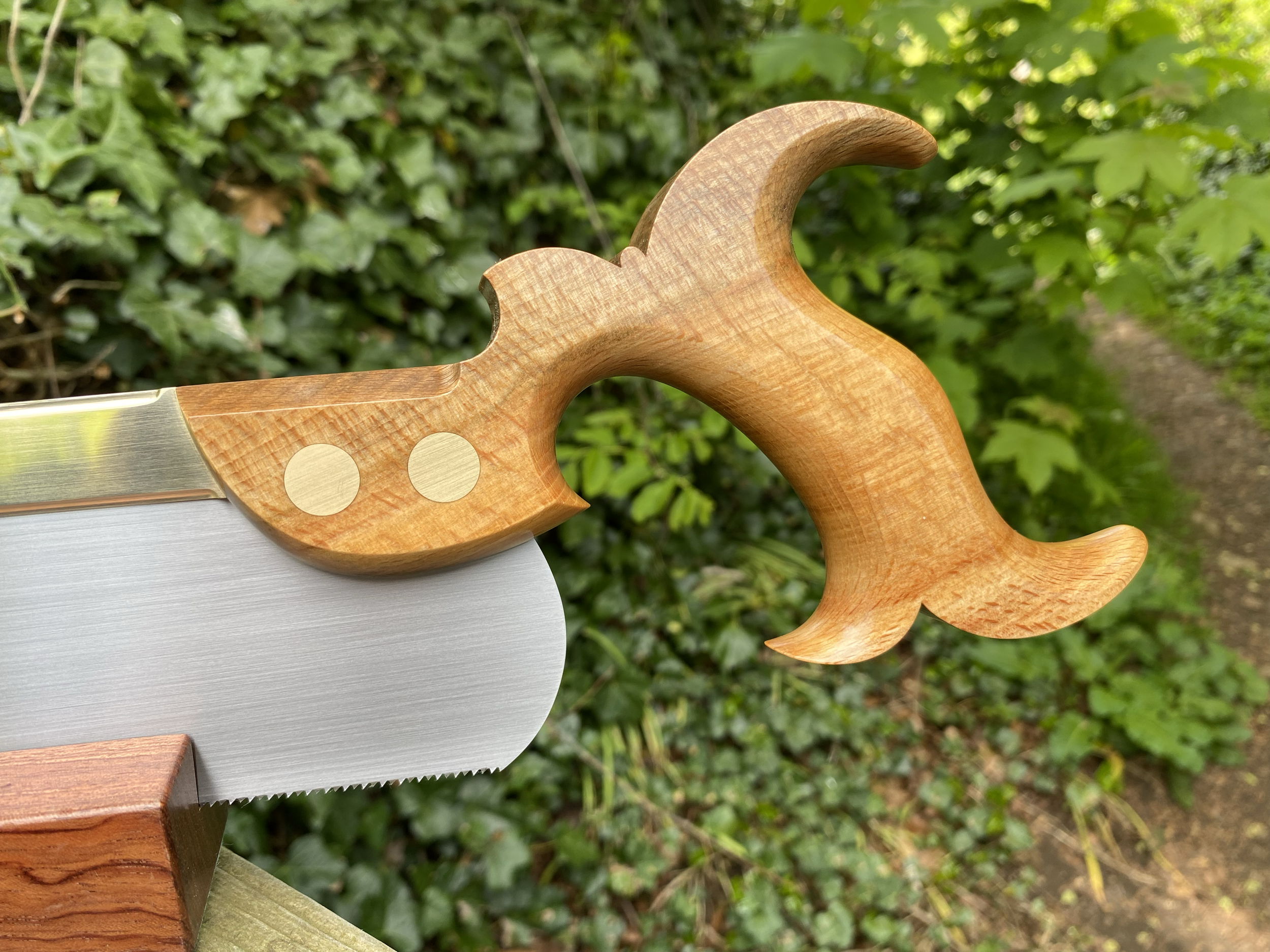
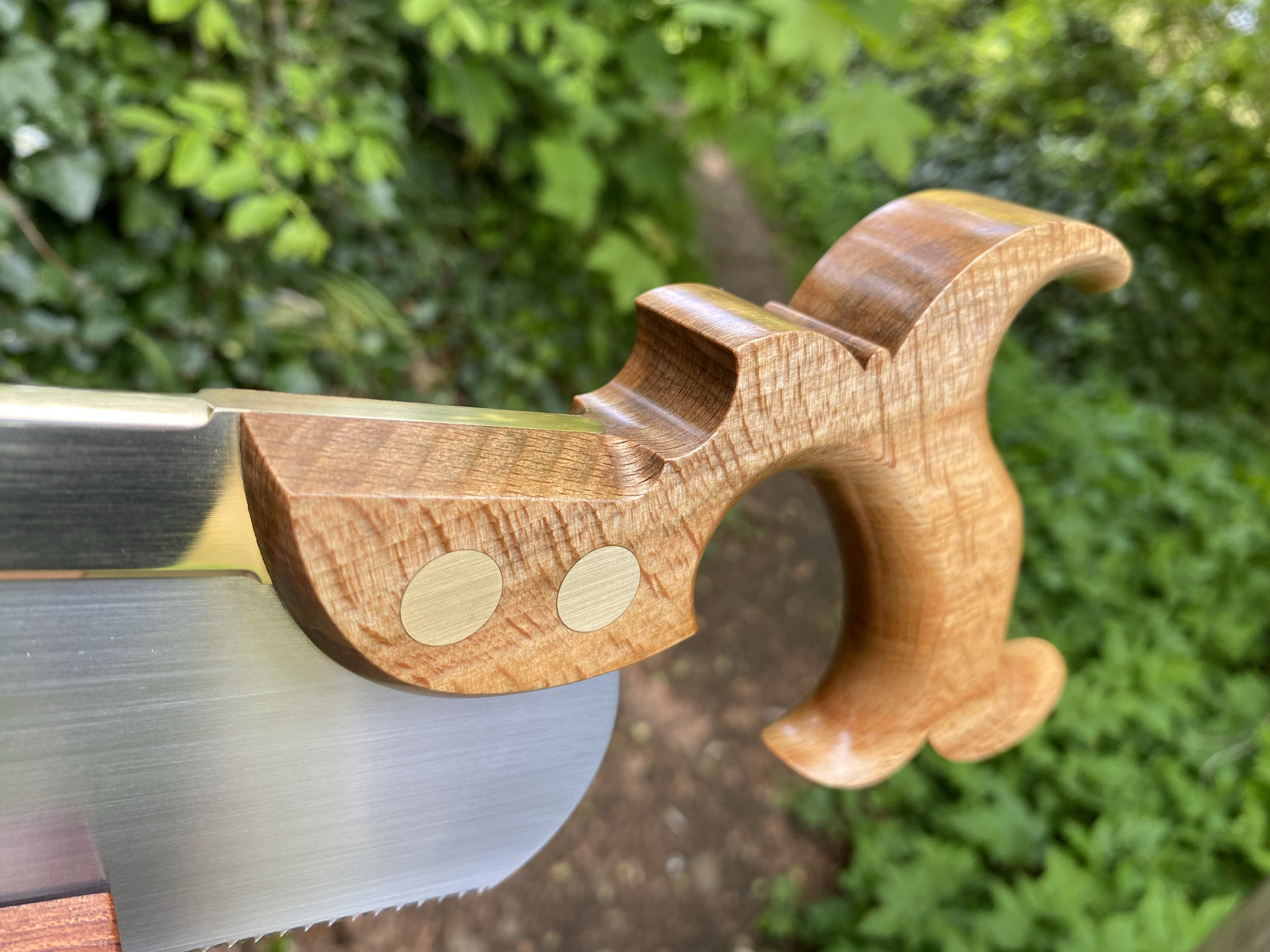
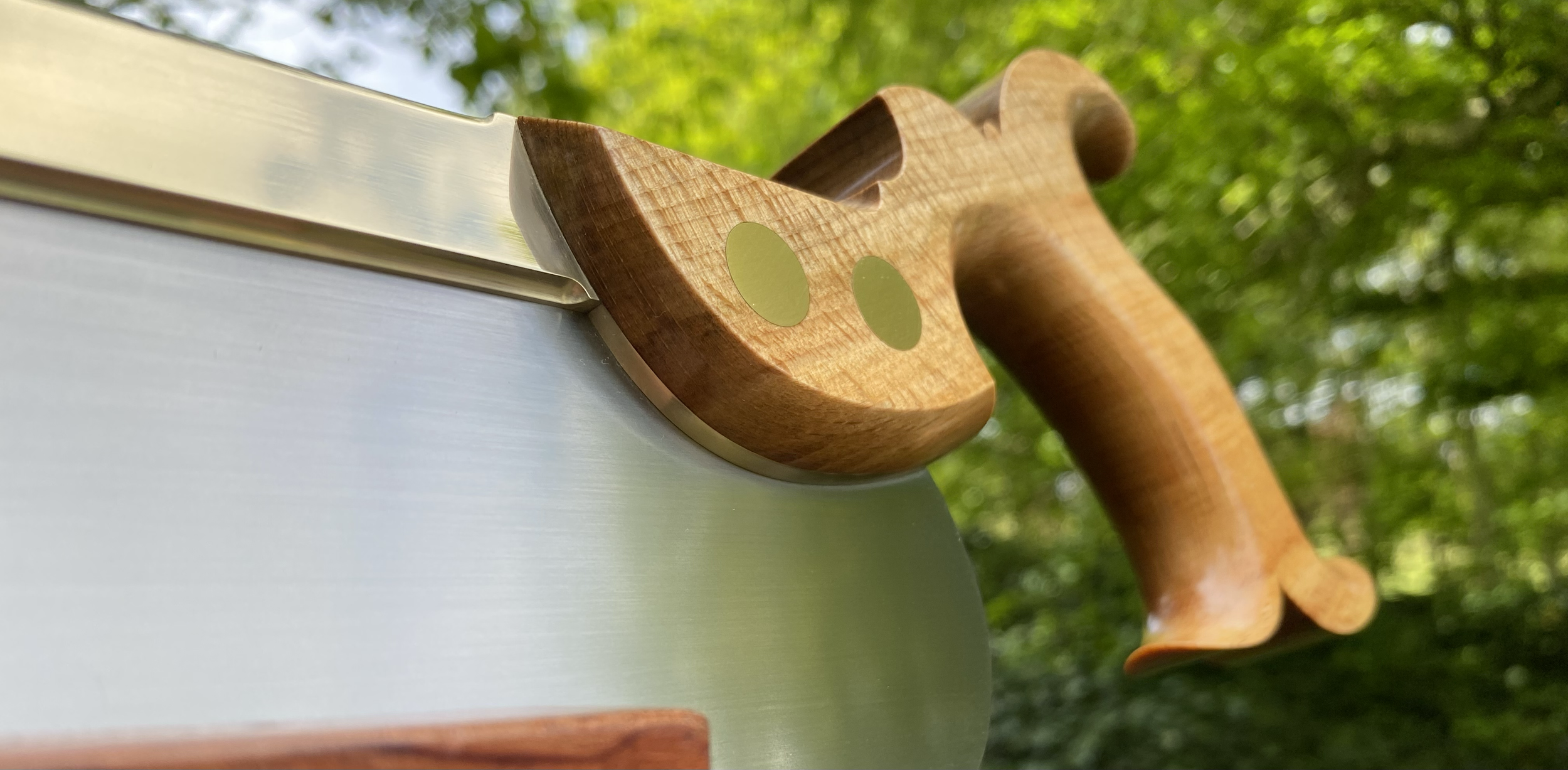
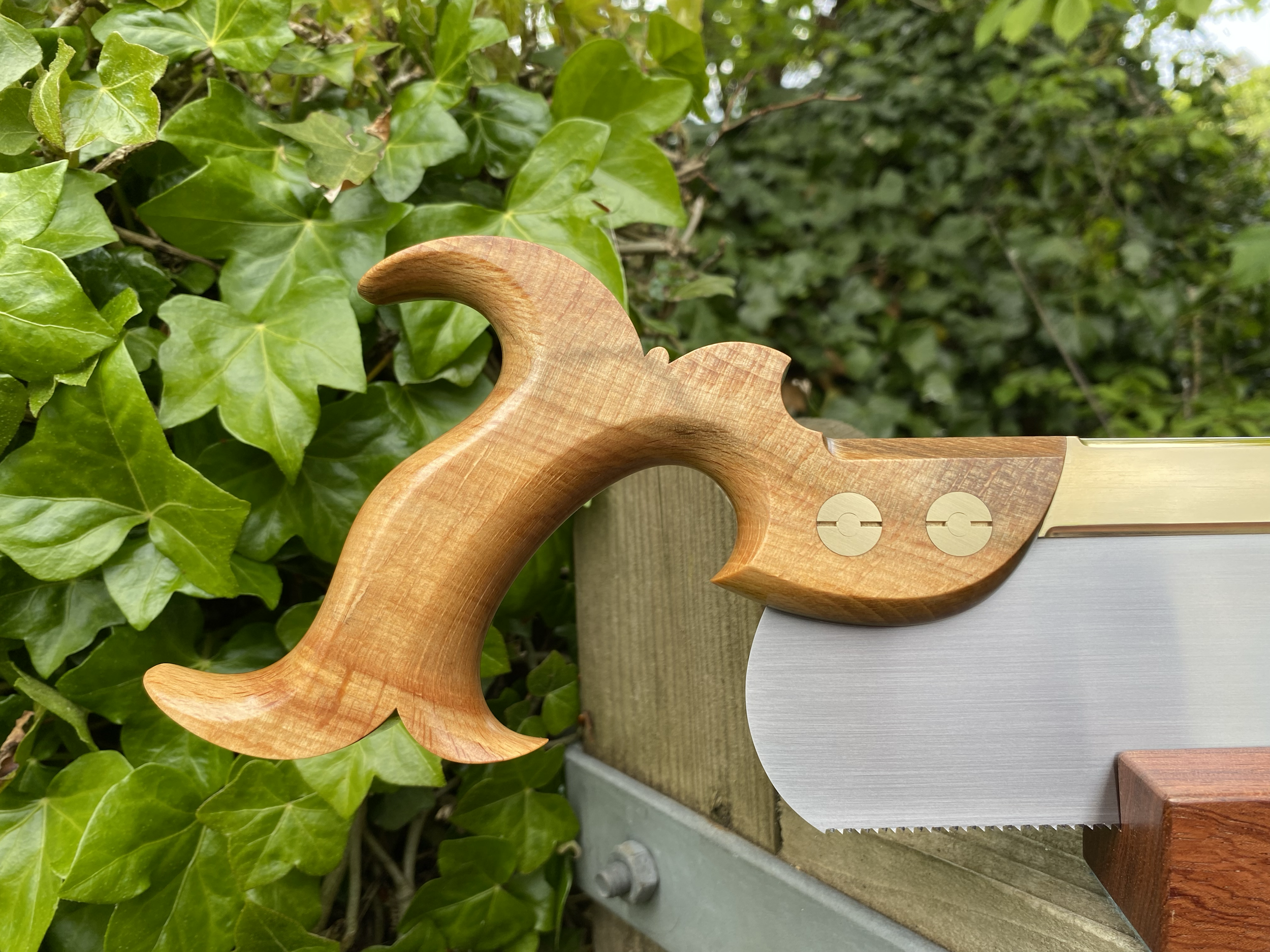
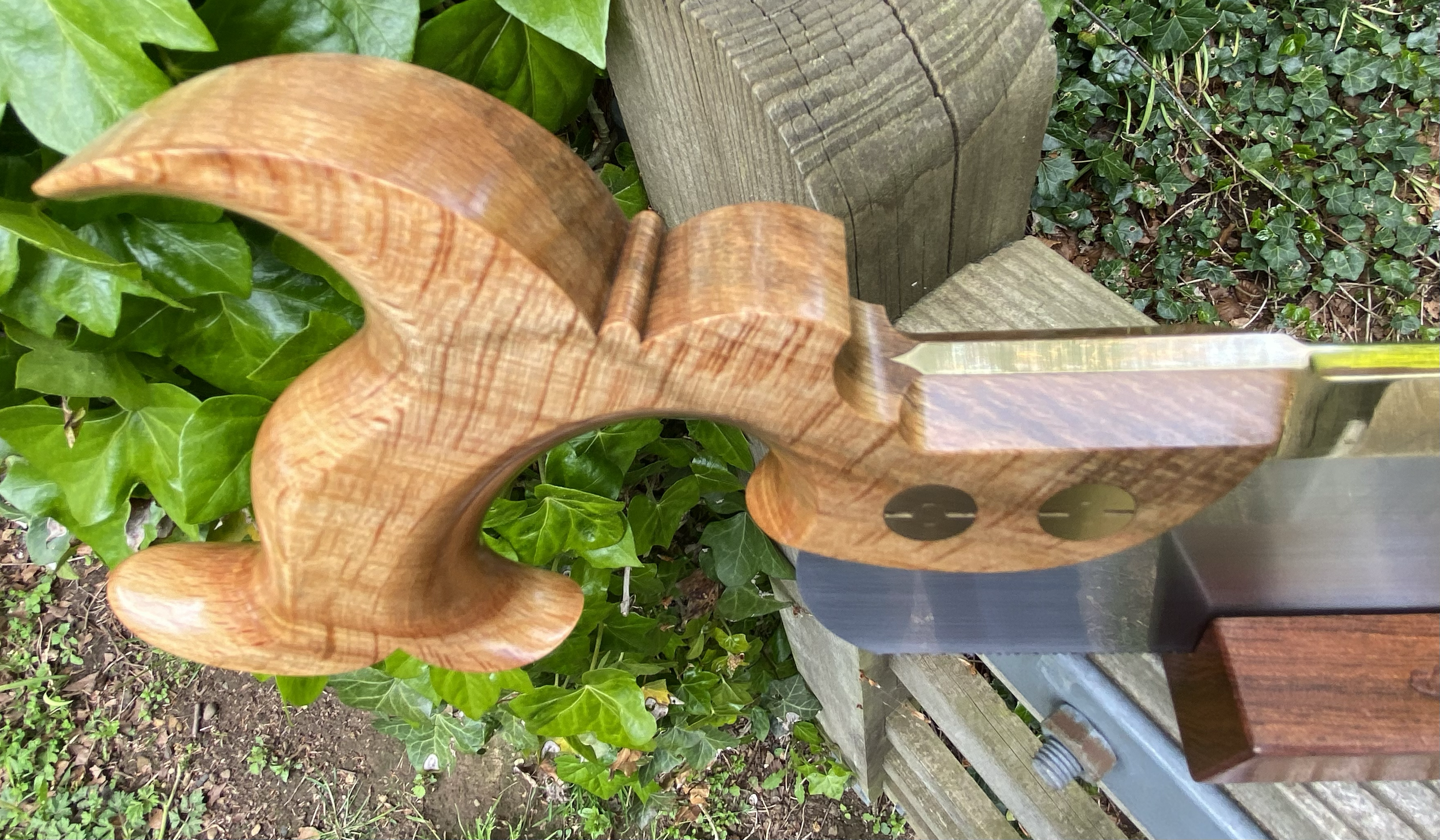
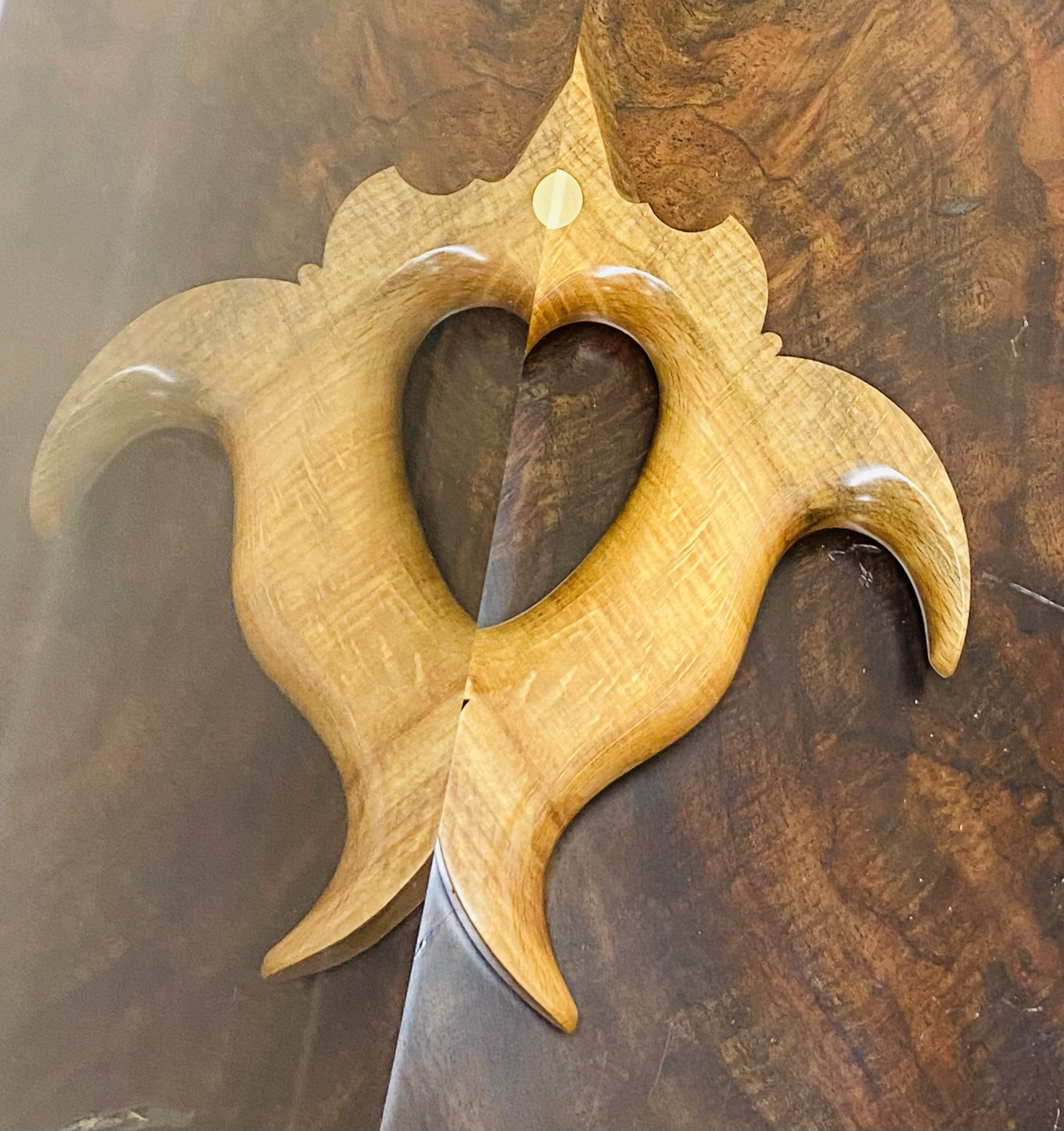
The saw with the hidden heart! Hepplewhite included many motifs within his work including shields, bows, flowers, ribbons and hearts. On reflection of the Hepplewhite Saw handle you will find a hidden heart – what’s not to love!
I believe the quote in the preface of ‘The Cabinet-Maker and Upholsterer’s Guide’ is also completely true in the aim of us making the Hepplewhite Saw. The company state that their aim is:
‘To unite elegance and utility, and blend the useful with the agreeable’.
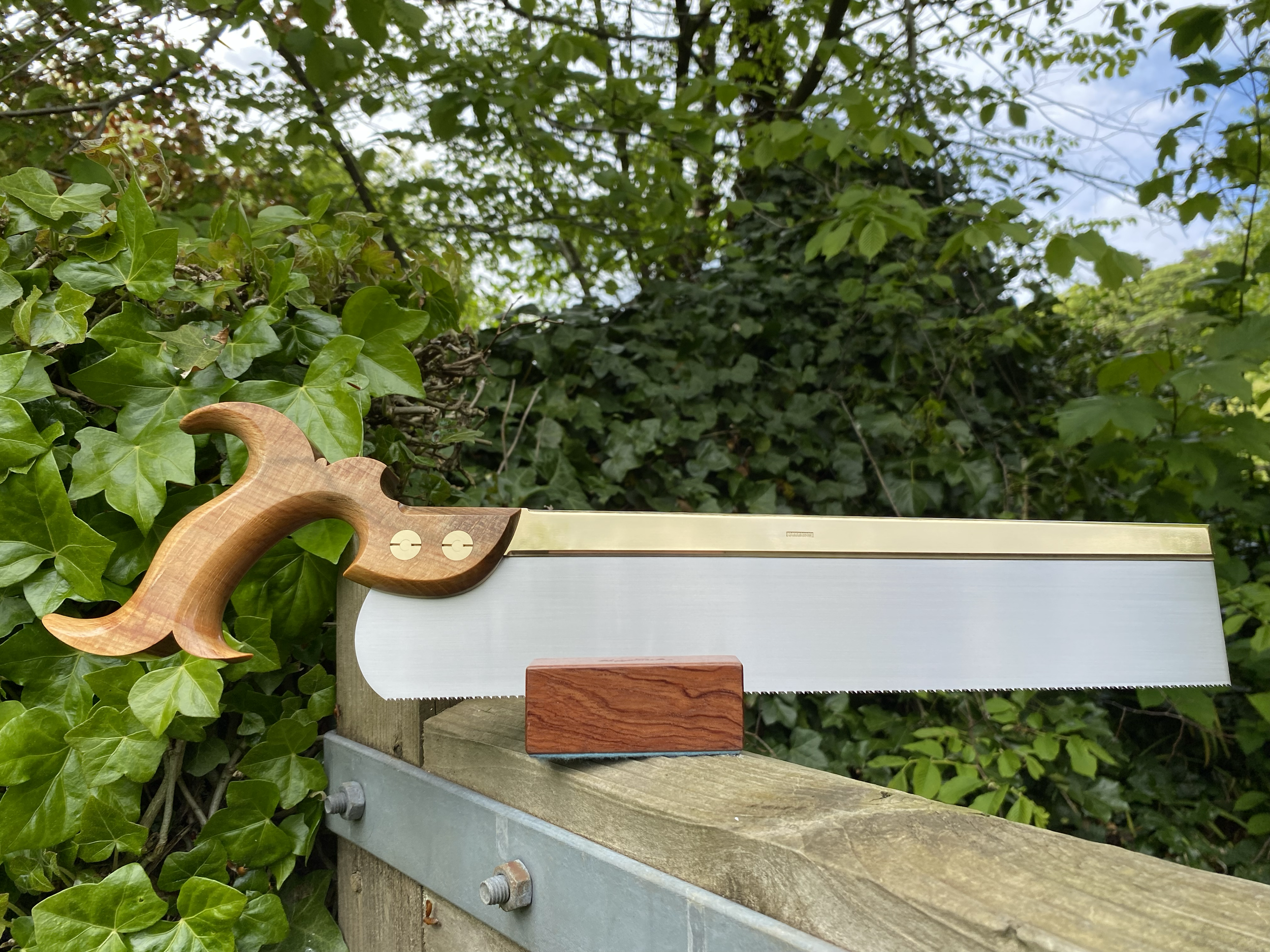
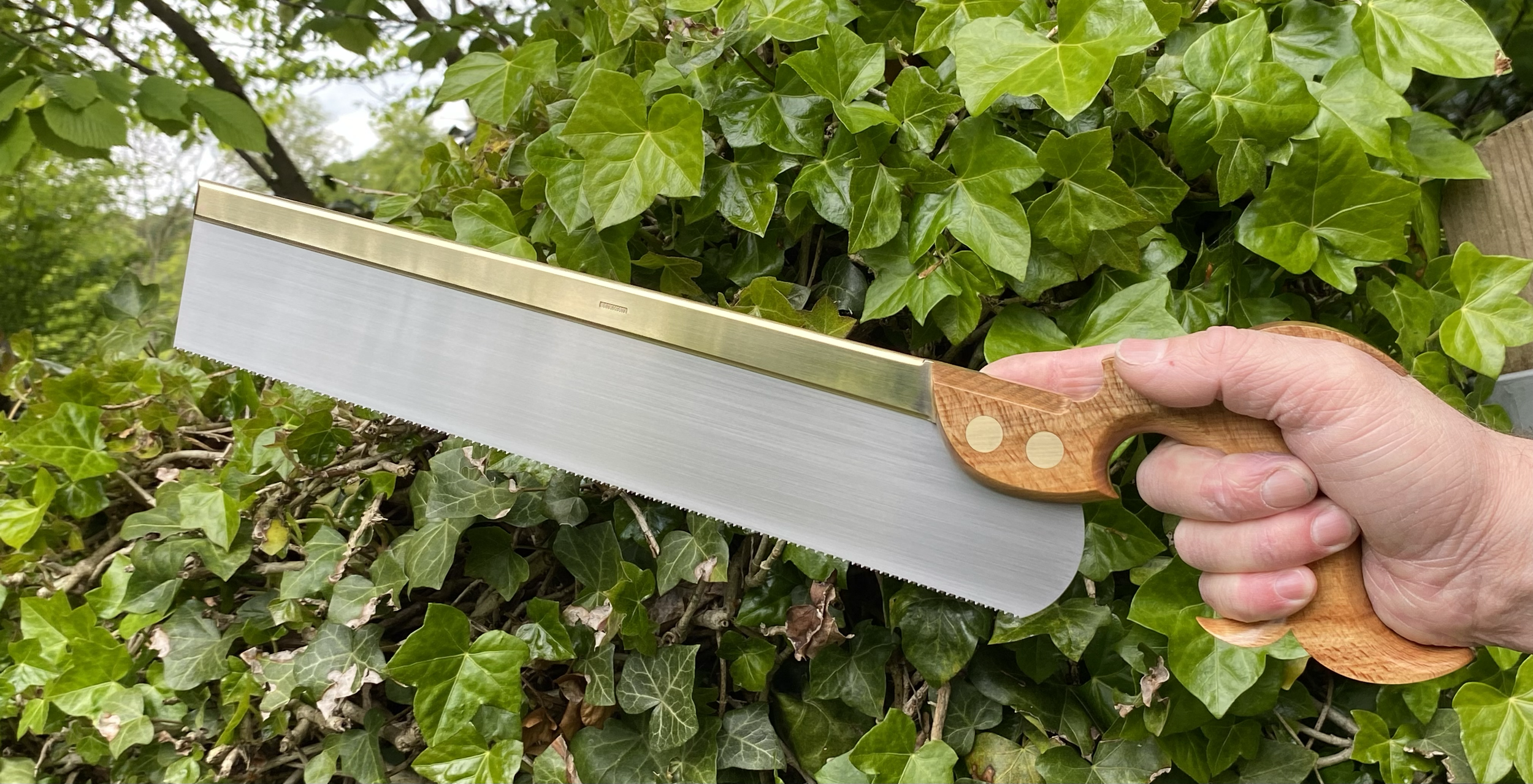
Drawing on the Neoclassic Hepplewhite Style, Shane has produced a fantastic universal saw with the following specifications:
· 13 ½” Fine Carcass Saw
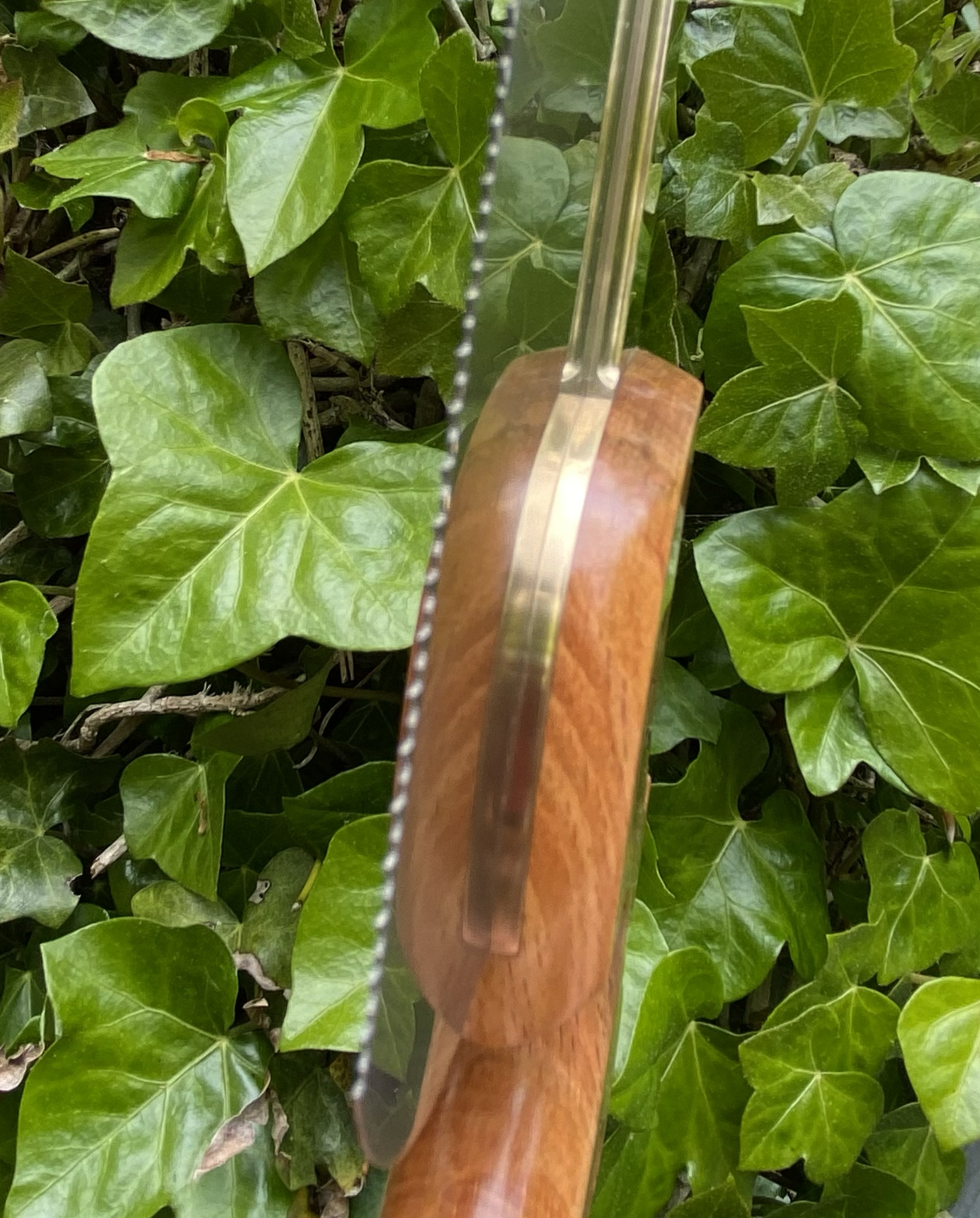
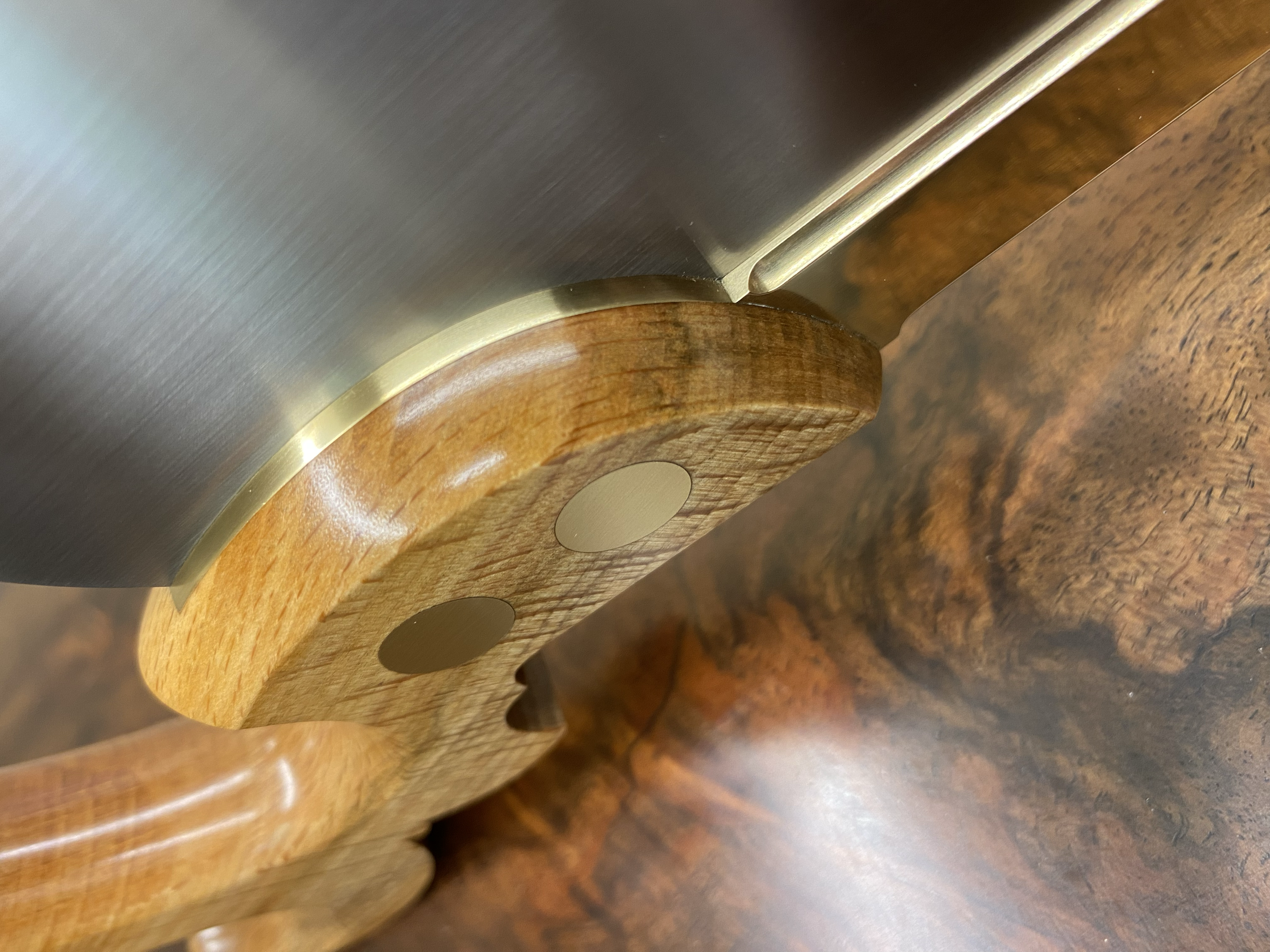
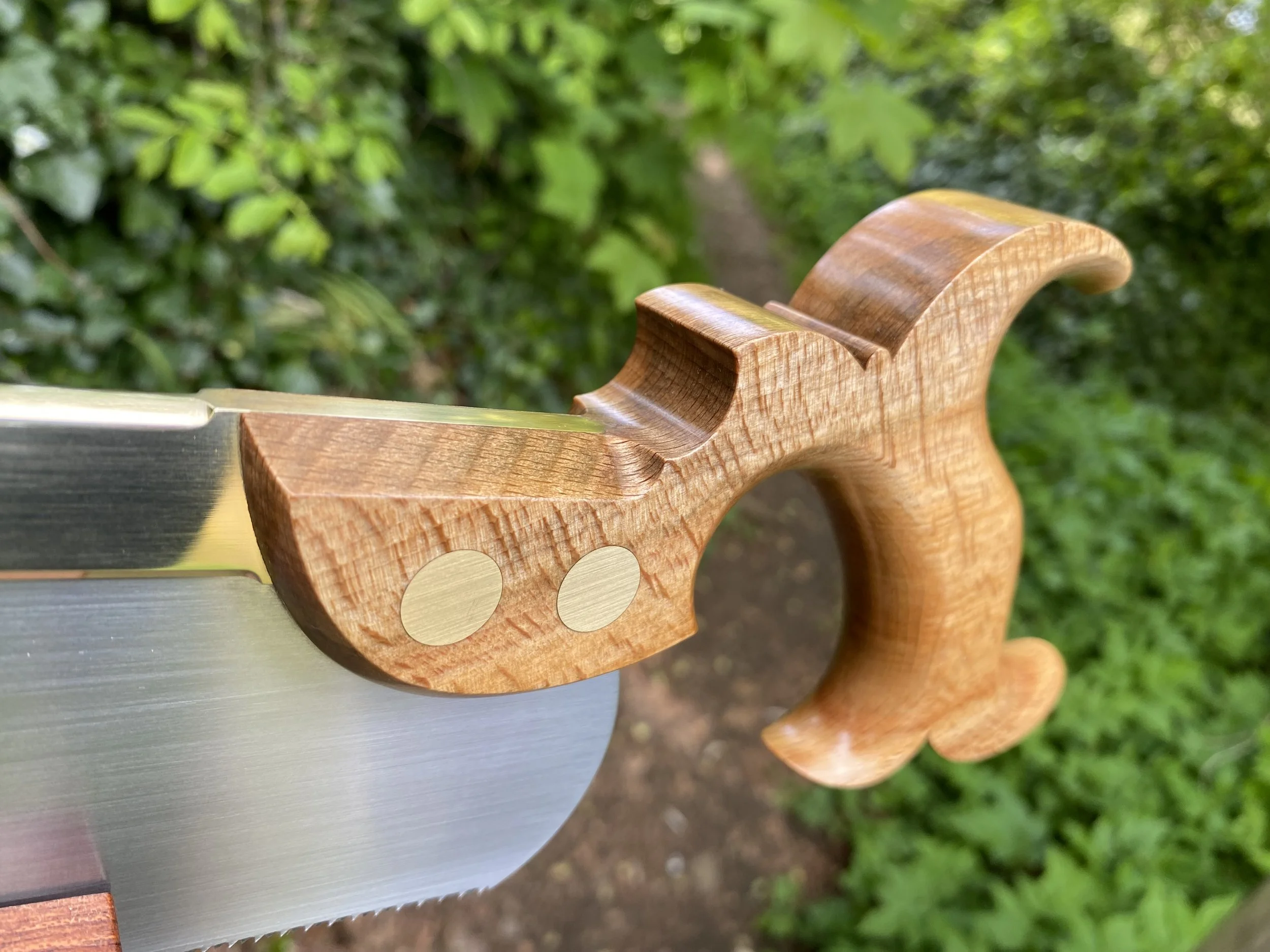
· Unique retaining brass back fluted to the underside and rounded at the top
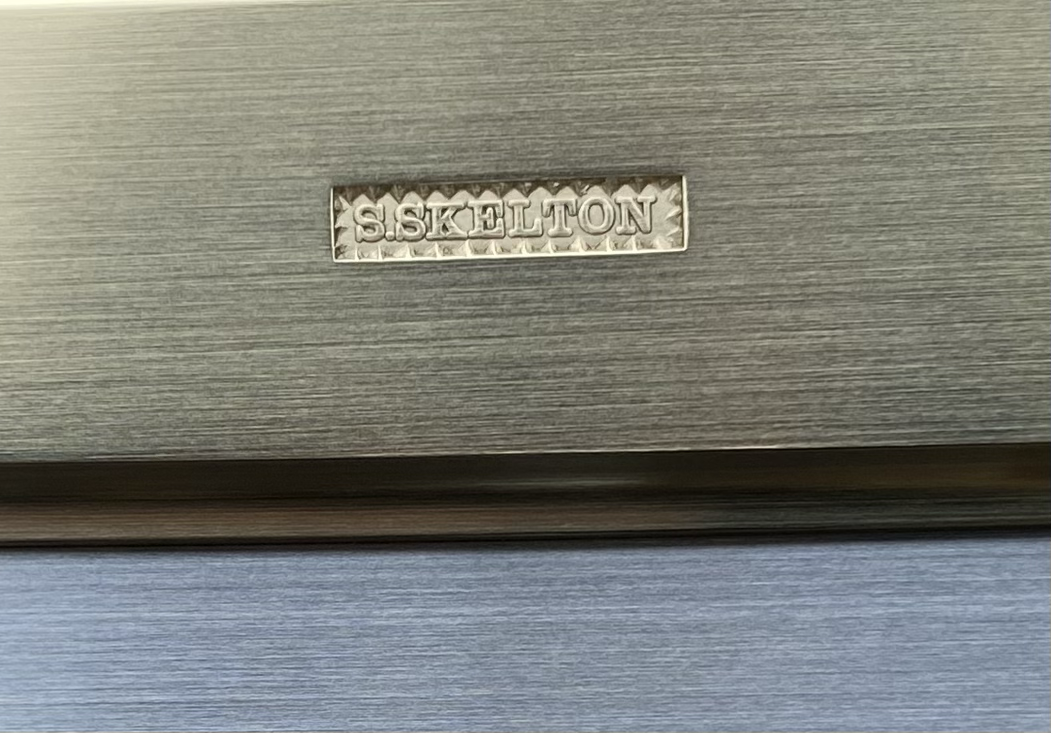
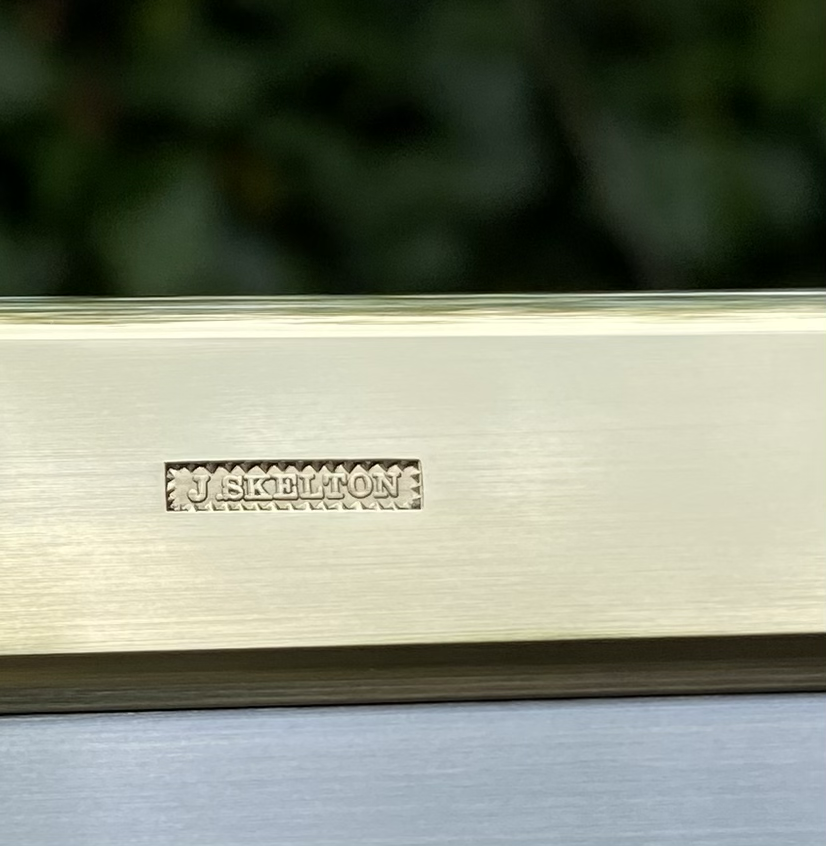
· Stamped with metal stamps with perforated borders like those used by saw makers in the 18thCentury
· Double stamped S. SKELTON & J. SKELTON symbolising our partnership and mirroring that of George and Alice Hepplewhite
· Canted blade 2-1/4” at the heel to 2” at the toe
· 0.018” Plate thickness
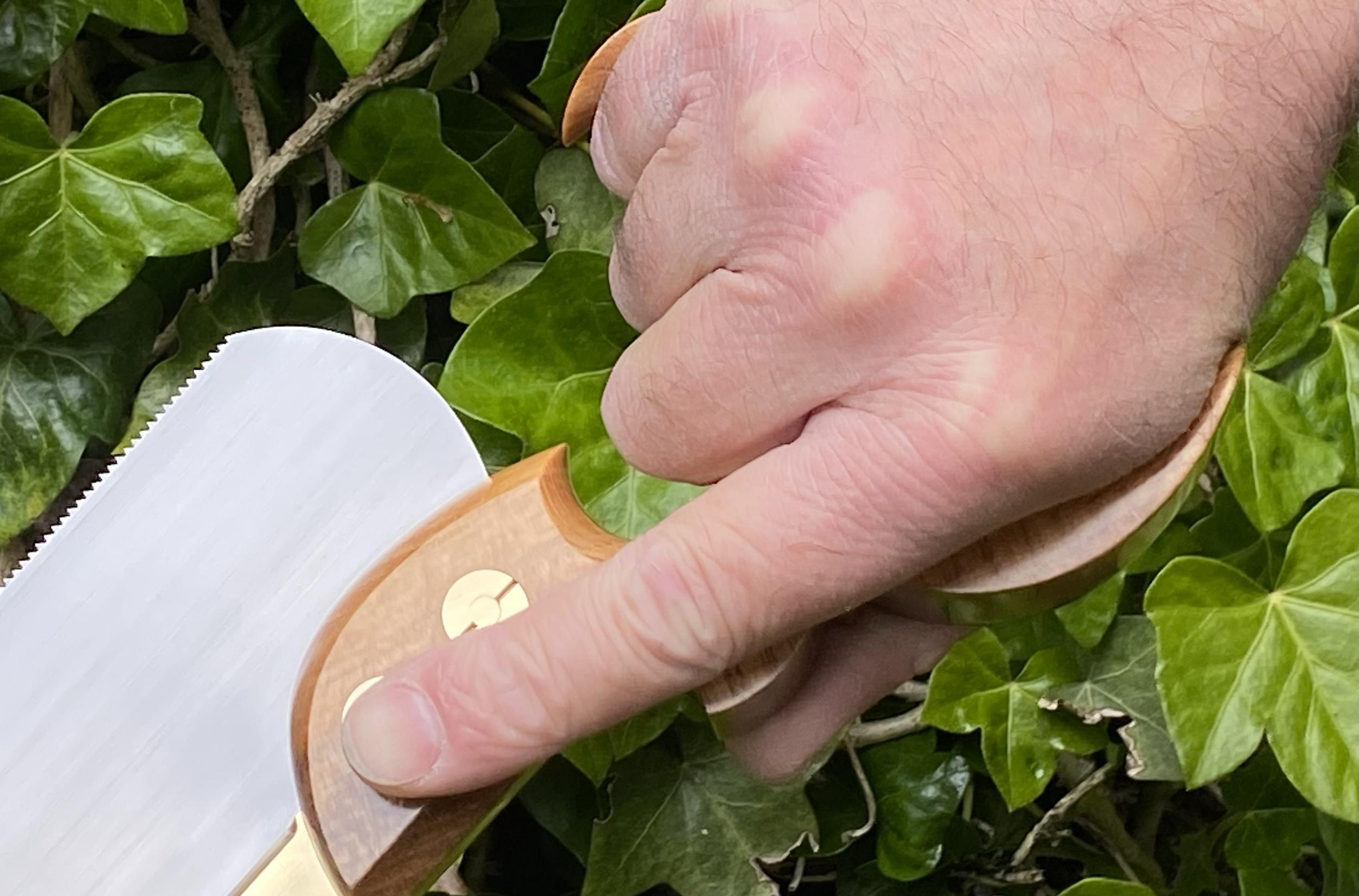
· Open pistol grip handle made from high-grade timbers. Palm sizes shown when available
· Half cheek handle design with an elegant convex underside. The half cheek allowing for full utilisation of the length and depth of the blade
· Fine Rip 16ppi / 15tpi (Most Universal) Rip 15ppi / 14tpi Crosscut 16ppi / 15tpi
· 0.0025” Set Per Side
· Prices starting at £675.00 and increasing depending upon timber and other enhancements Postage £20.00 UK / £40.00 Overseas